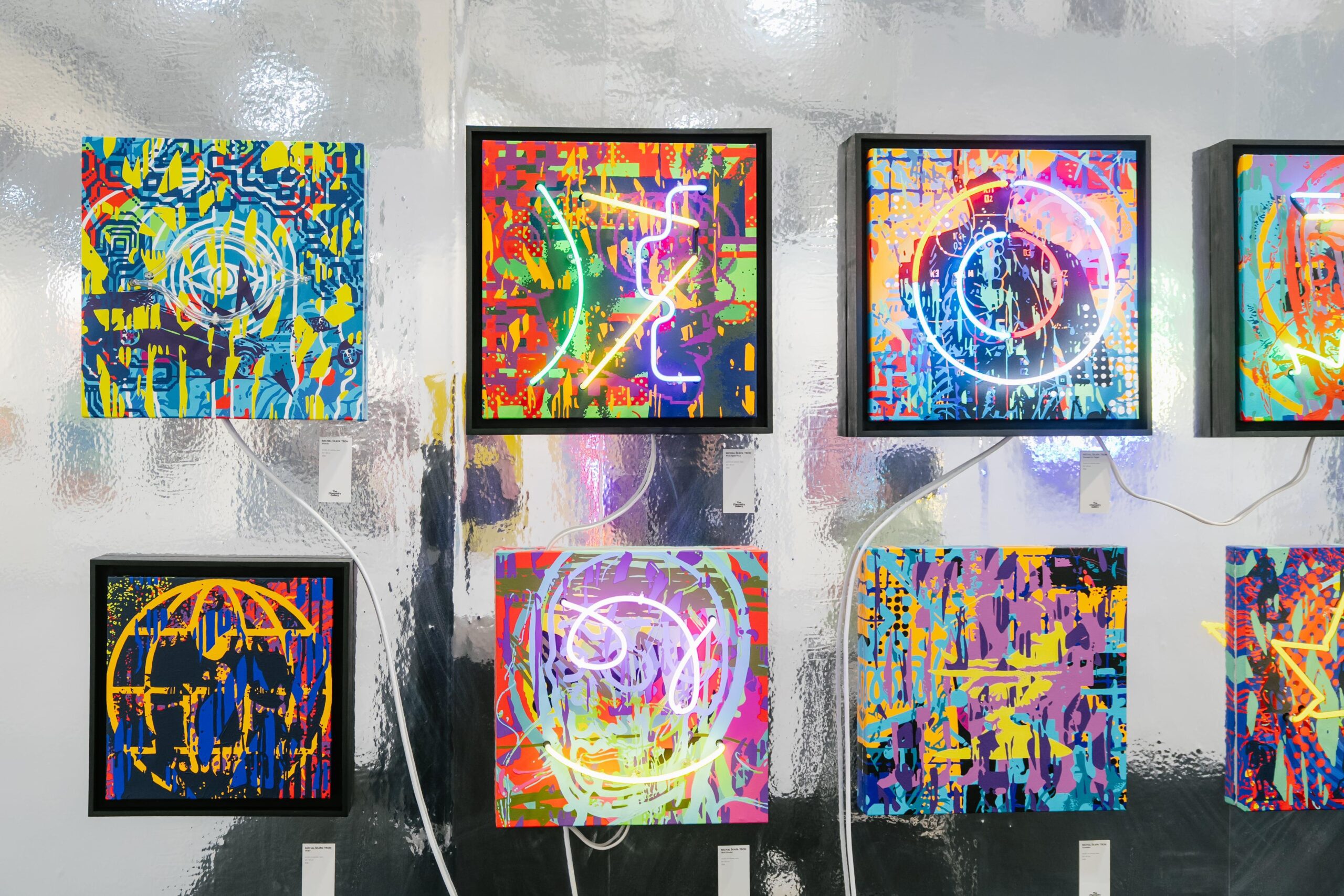
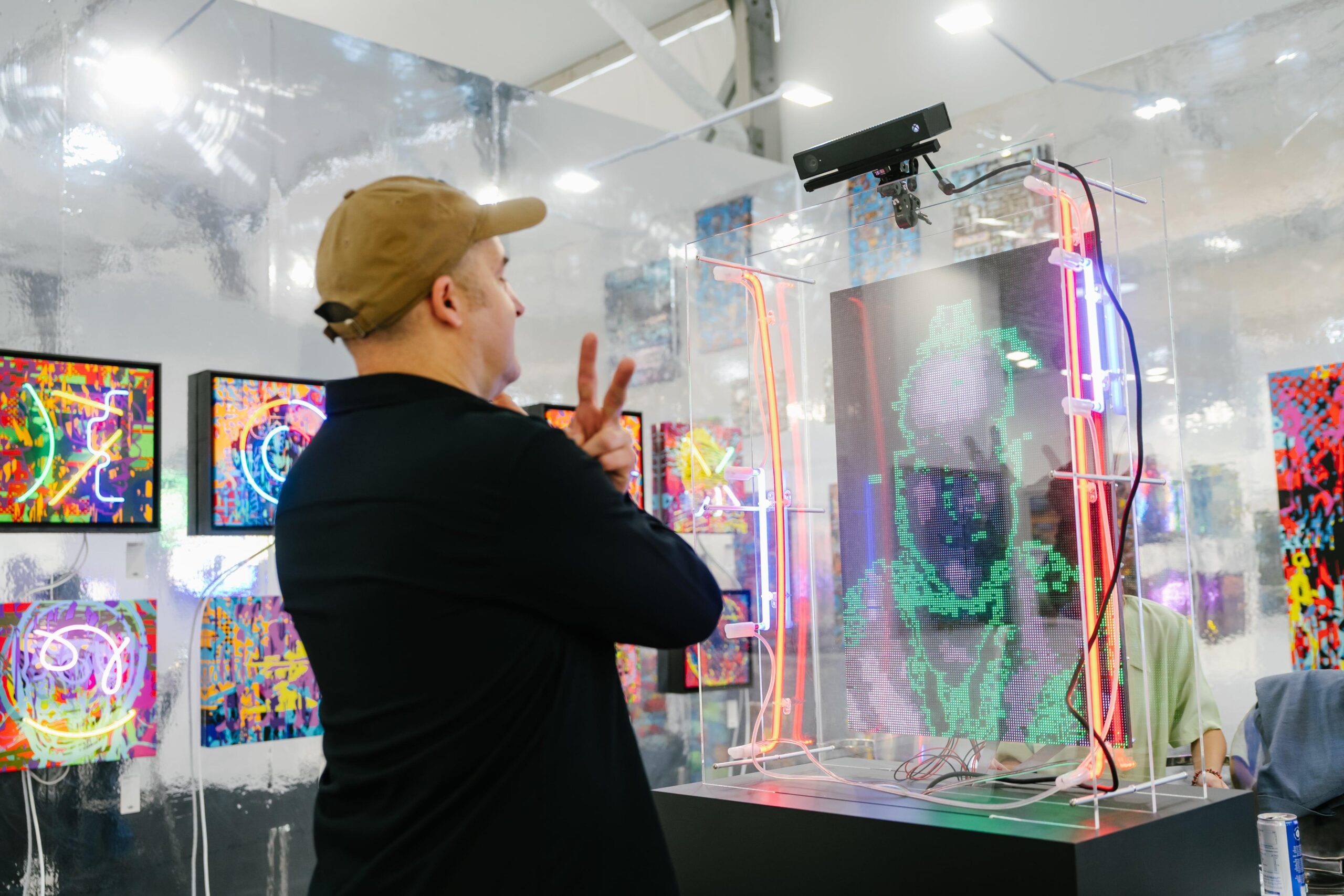
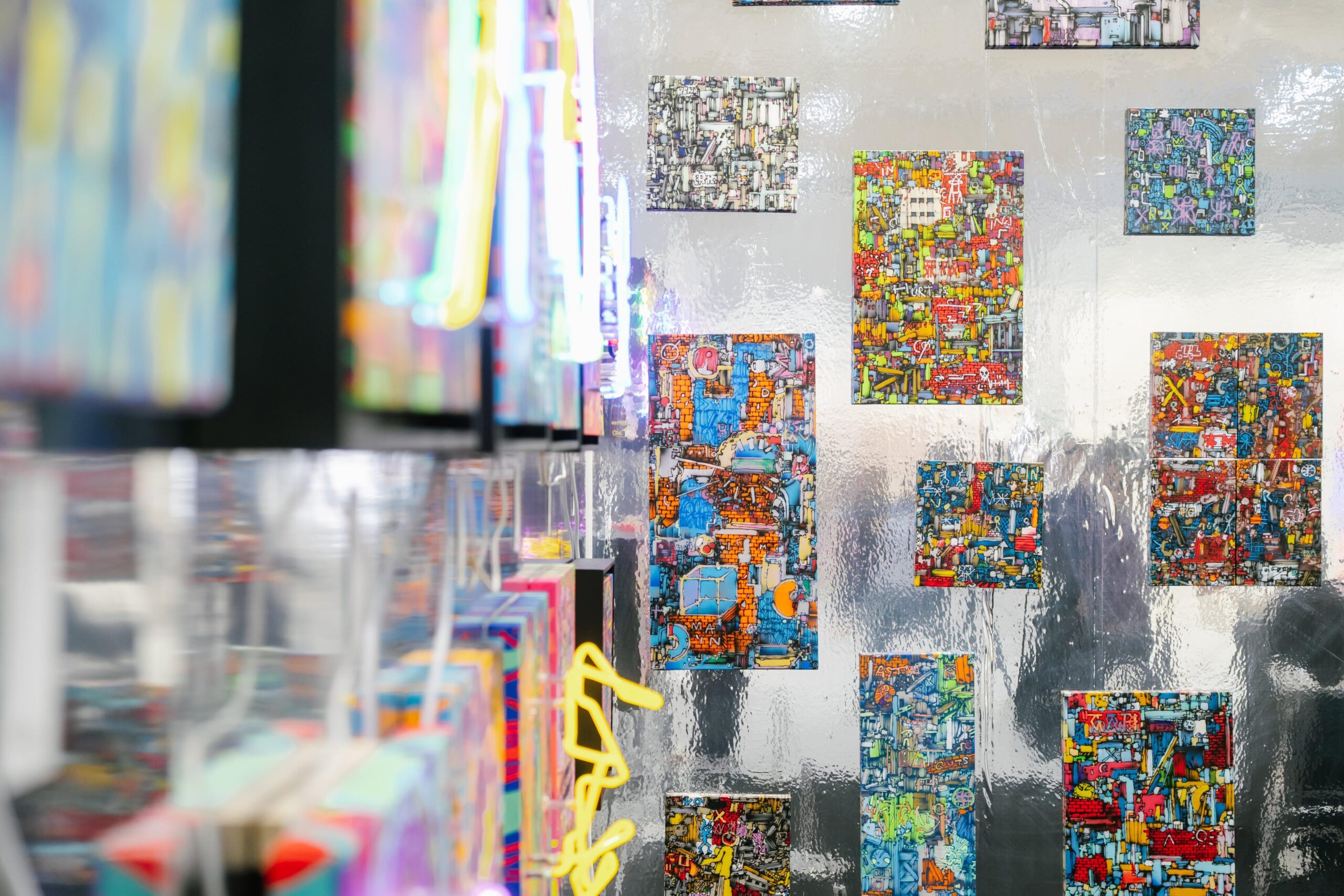
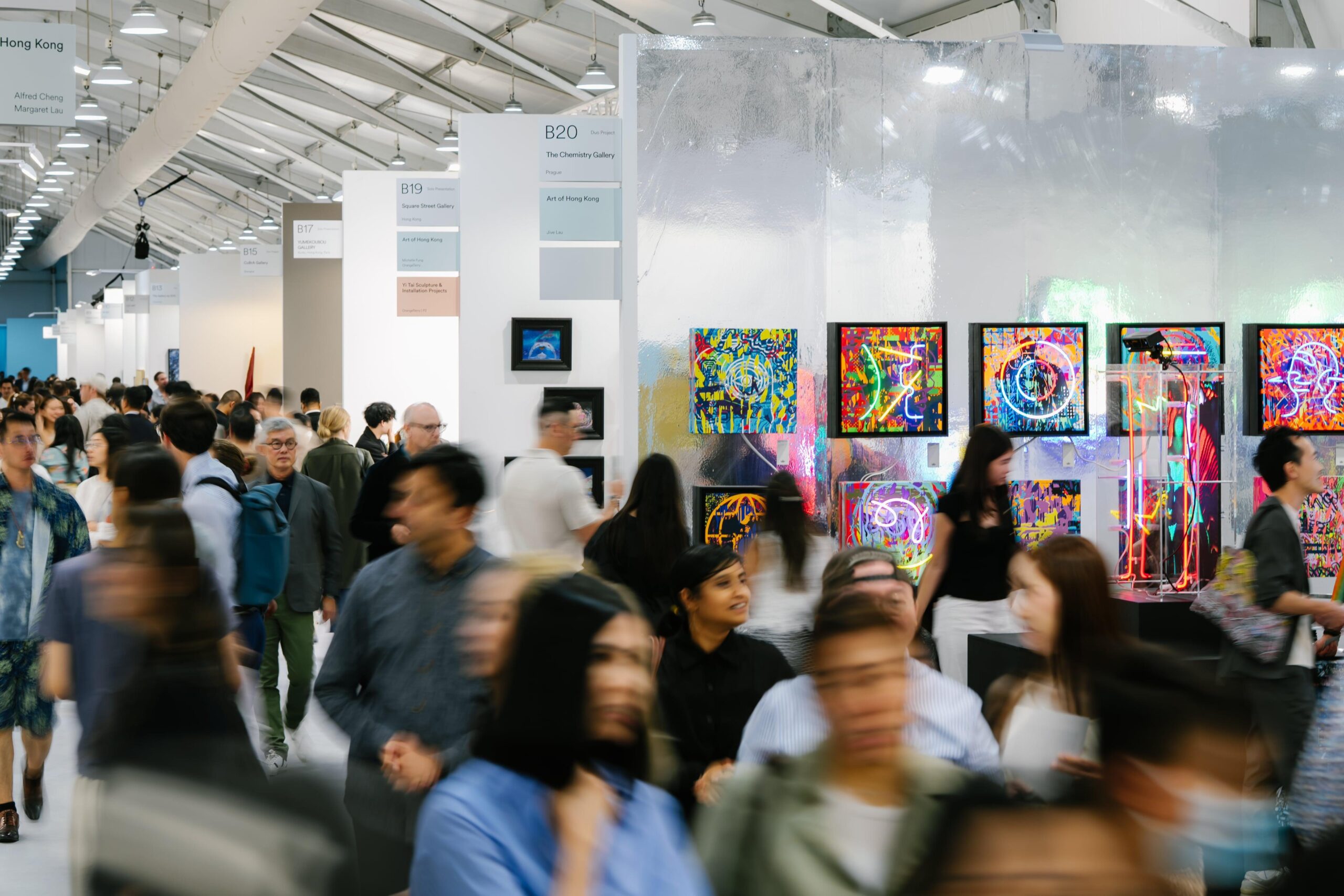
At Art Central in Hong Kong, you presented a dialogue between Czech graffiti and Hong Kong neon art. What led you to this particular fair?
I went to Art Central in Hong Kong with Michal Škapa, and we had agreed to try participating for the first time. Michal had already been to Hong Kong twice—he took part in HK Walls and had a solo exhibition at Windham Social. I had been there for the first time a year earlier at the invitation of Klára Jurčová, the Consul General of the Czech Republic in Hong Kong. At that time, I curated a smaller exhibition of Czech and Hong Kong artists, and I also visited Art Central, where Klára introduced me to its president. He later visited me in Miami a few years ago, and I then visited him again last year. Our participation this year was the result of long-term efforts and networking; Klára played a crucial role in this.
How did you conceive the presentation for an international audience?
From previous fairs, I realized that it’s important to come up with an installation that stands out. In 2024, we received an award for Best Booth in Miami, where we presented a striking installation by Pavel Dušek and Pavlína Kvita that differed significantly from standard fair presentations. So in Hong Kong, we wanted something similar—we used mirrored foil on the walls to reflect the neon works. We were also able to present neon because Michal had previously collaborated with the Hong Kong neon artist Jive Lau. It felt important to include a local representative at the fair, which is why we invited him.
Your presentation also included talks and accompanying programs. Were you able to connect with the local professional scene through these?
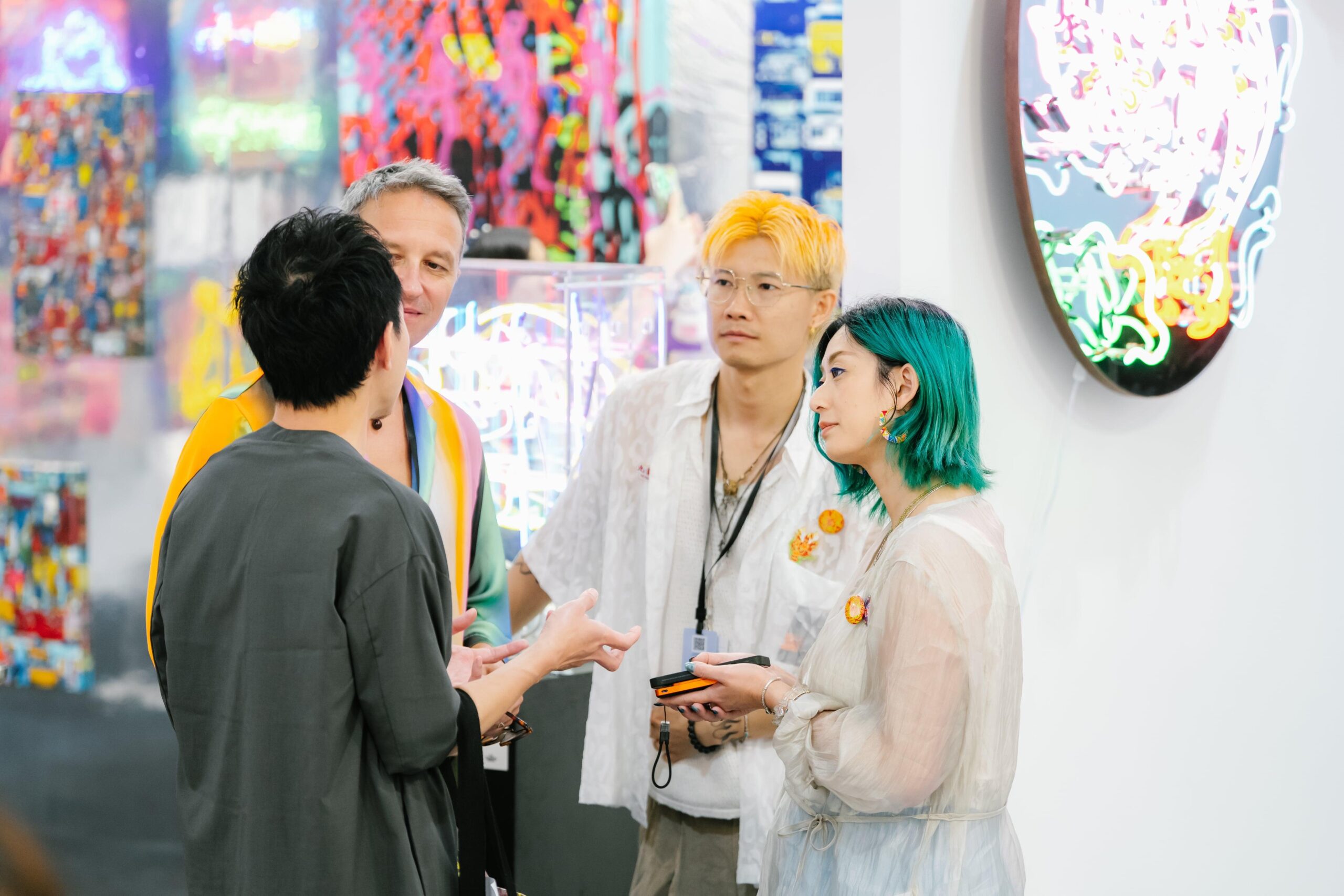
The effort to connect the Czech and Hong Kong scenes has long been led by Klára Jurčová, who initiated a series of meetings and discussions called Art Dialogue. This year was dedicated to Czech art, last year to Czech design, and next year is planned as the Year of Czech Music. A week before Art Basel Hong Kong and Art Central, a Sunday event titled Art Dialogue Czech Republic–Hong Kong took place. I participated along with Michal Škapa, Richard Bakeš, and Ondřej Rakušan representing digital artists within HK Walls; representatives of Hong Kong institutions and local artists were also present.
Klára’s work is incredible—if all Czech representatives abroad were this active, we would be a cultural superpower. Thanks to her, the dialogue has been established over the long term and continues to function. Yes, these are ways of connecting with the local scene while also presenting the Czech context.
How does the art market function at non-European fairs? Do you observe any specific characteristics?
Over time, I’ve come to understand that every fair is different because it takes place in a different location, and that different kinds of art resonate in Hong Kong than in Miami, London, or Los Angeles. Someone looking at it from a global perspective might say that’s not the case, but that’s how it feels to me—each place has its own specific aesthetic that it understands, and it’s important to respond to it, at least partially.
At the same time, the significance of fairs lies in the fact that global collectors attend them. A French collector might come and not really care whether they encounter traditional Chinese art in Hong Kong or something closer to a European context—if it resonates with them, they will want to acquire it.
So it’s always a combination: on the one hand, responding to the specifics of the local environment, and on the other, having a bit of luck that the presentation resonates with someone from an international audience.
Do you feel you succeeded this year—and did it reflect not only in sales but also in the overall reception of your presentation?
Yes, the response was great. Part of our preparation was also to include a Hong Kong artist, so that a local presence would be embedded in the presentation.
It was also important to have the assistance of Melissa, who speaks both Mandarin and Cantonese, allowing her to communicate with visitors from Hong Kong and mainland China in their own language. My experience from previous fairs shows that the more specific the language, the more important it is to have someone who speaks it, rather than relying solely on English—even though English, of course, also works.
What are The Chemistry Gallery’s other international activities?
We started participating in international fairs in 2016. At the time, many people asked me whether we would attend fairs. I hesitated at first—it’s costly and uncertain, and back then I was happy just to be able to pay the gallery’s rent. Looking back, however, it was the right decision.
It’s financially and logistically very demanding, but it makes sense for us. It has brought us international collectors and sales we would not have otherwise achieved. At the same time, it is always, to some extent, a risk. I often say that art fairs are a bit of a gamble. You might feel you’ve had a strong year, with good exhibitions and success, but then you arrive in Berlin and realize that no one knows you—the gallery or the artists—and everything has to work instantly, on site. That’s why we started focusing more on the overall presentation of the booth, making it distinctive and cohesive.
We plan to attend three fairs per year—Berlin and Miami, and now also Hong Kong. Berlin makes sense in relation to the European market; it’s also relatively easy logistically—you can rent a van and stay with friends. It also takes place during Berlin Art Week, so German collectors are present. Miami has long been our most successful fair and offers broader networking opportunities. It developed from my earlier participation in New York fairs. At one point, the head of SCOPE in New York told me: “Petr, the main fair isn’t here—it’s in Miami. Take what you’re doing here and bring it there.” And it really worked. Hong Kong is something we are currently exploring as a new experience. This distribution makes sense for us, but we’ll see whether we can afford it in the coming years.
What advice would you give to a gallery preparing for a fair?
I would definitely mention the advantage of support from the city. Galleries from Prague can apply for a grant of roughly 100,000 to 200,000 CZK when participating in an international fair, which helps cover part of the costs. This is especially important when the presentation doesn’t succeed—it at least partially offsets the financial risk.