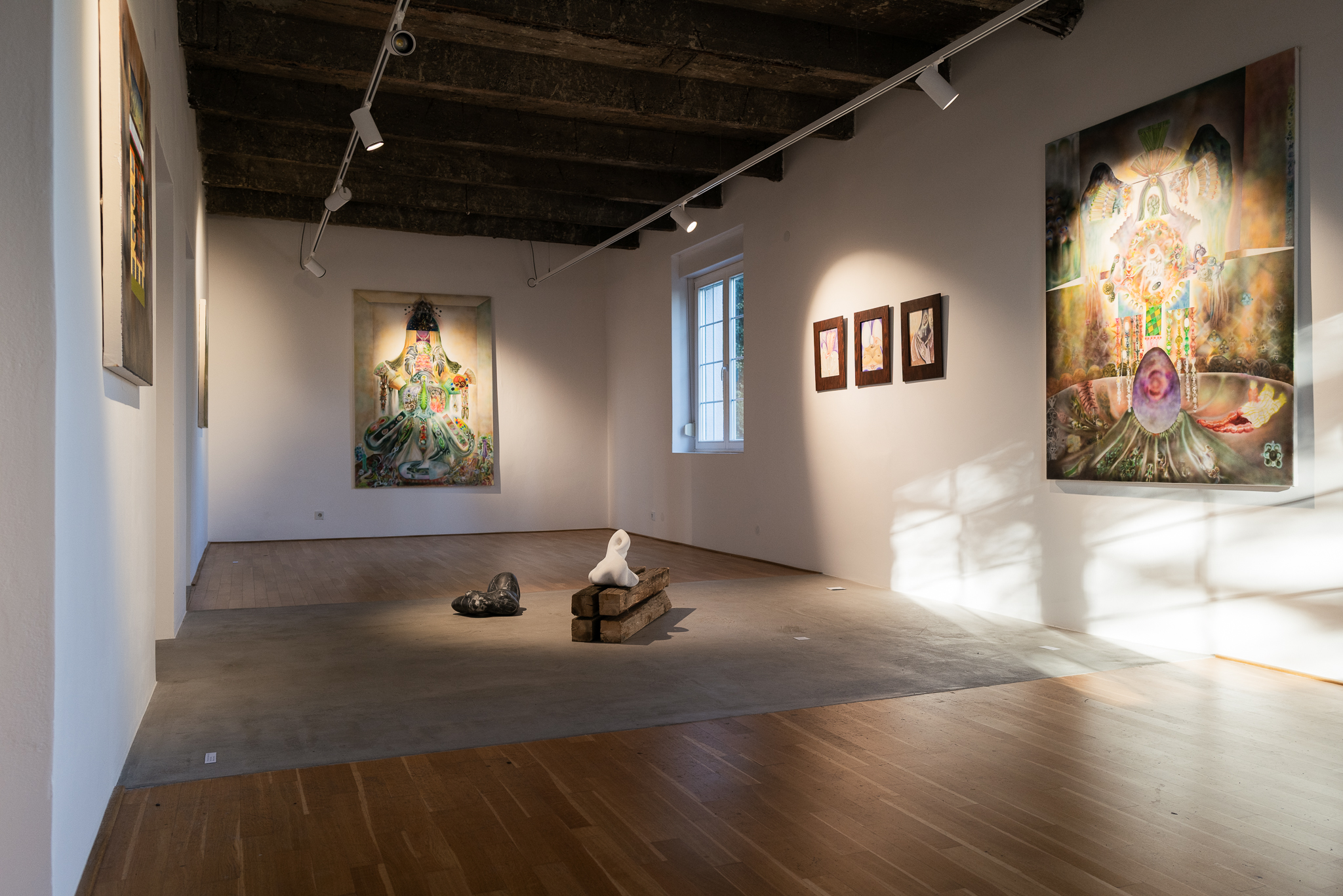
The Body Between Vulnerability, Identity and Control
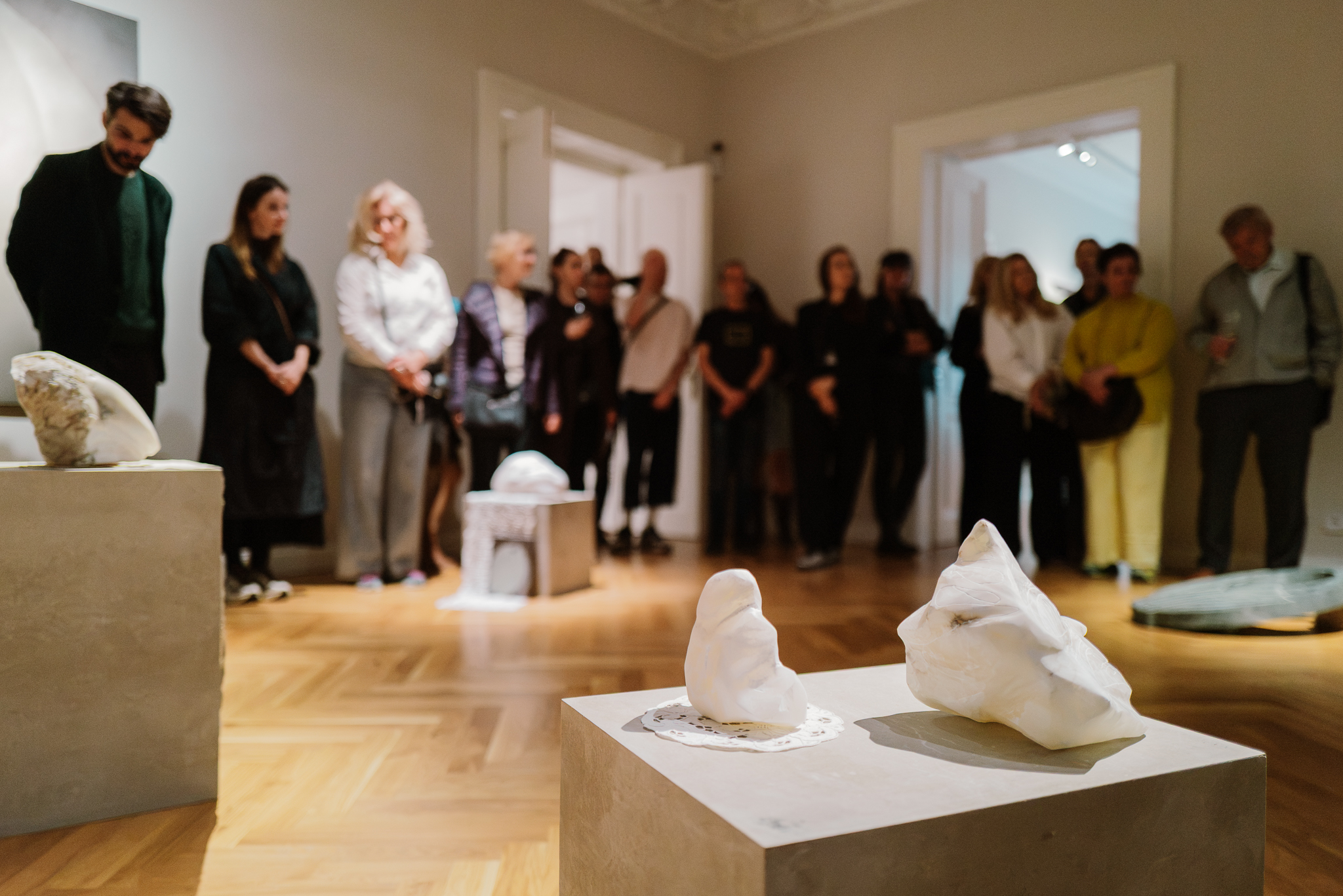
Although the Prague Art Week programme is largely developed independently by the participating institutions and galleries, several common thematic threads can be traced across the exhibitions, reflecting contemporary social and cultural concerns. One of the strongest themes running through this year’s programme was the body as something continually shaped by social norms, technologies, environments and relationships.
Beside Bodies at Berlínskej model brought together feminist and queer approaches from different generations, presenting the body as a porous surface onto which questions of autonomy, gender, sexuality and normativity are inscribed. In Tereza Kalousová’s exhibition Sorority, on view at Clauda Gallery until 24 October, both the body and its surroundings gradually become subject to the same smooth, perfectly optimised logic. Comfort, aesthetic purity and the absence of friction become instruments of control: a process of assimilation into an environment that appears safe precisely because it eliminates anything disruptive in advance.
Romana Drda de Angelis’s Occult Couture at NoD explores similar concerns. The artist uses corsets and clothing not merely as means of covering or representing the body, but also as devices that physically shape, constrain and transform it. The exhibition, on view until 28 October, thus becomes a material expression of the hidden processes that shape our identities.
A different perspective is offered by Memory of Touch at Kunsthalle Praha, which approaches fragility and vulnerability as both aesthetic and social strategies. During PAW, this dimension was further developed through a performance by Lukáš Hofmann (Saliva), extending the theme beyond the exhibited object into a live encounter with the space and the present moment.
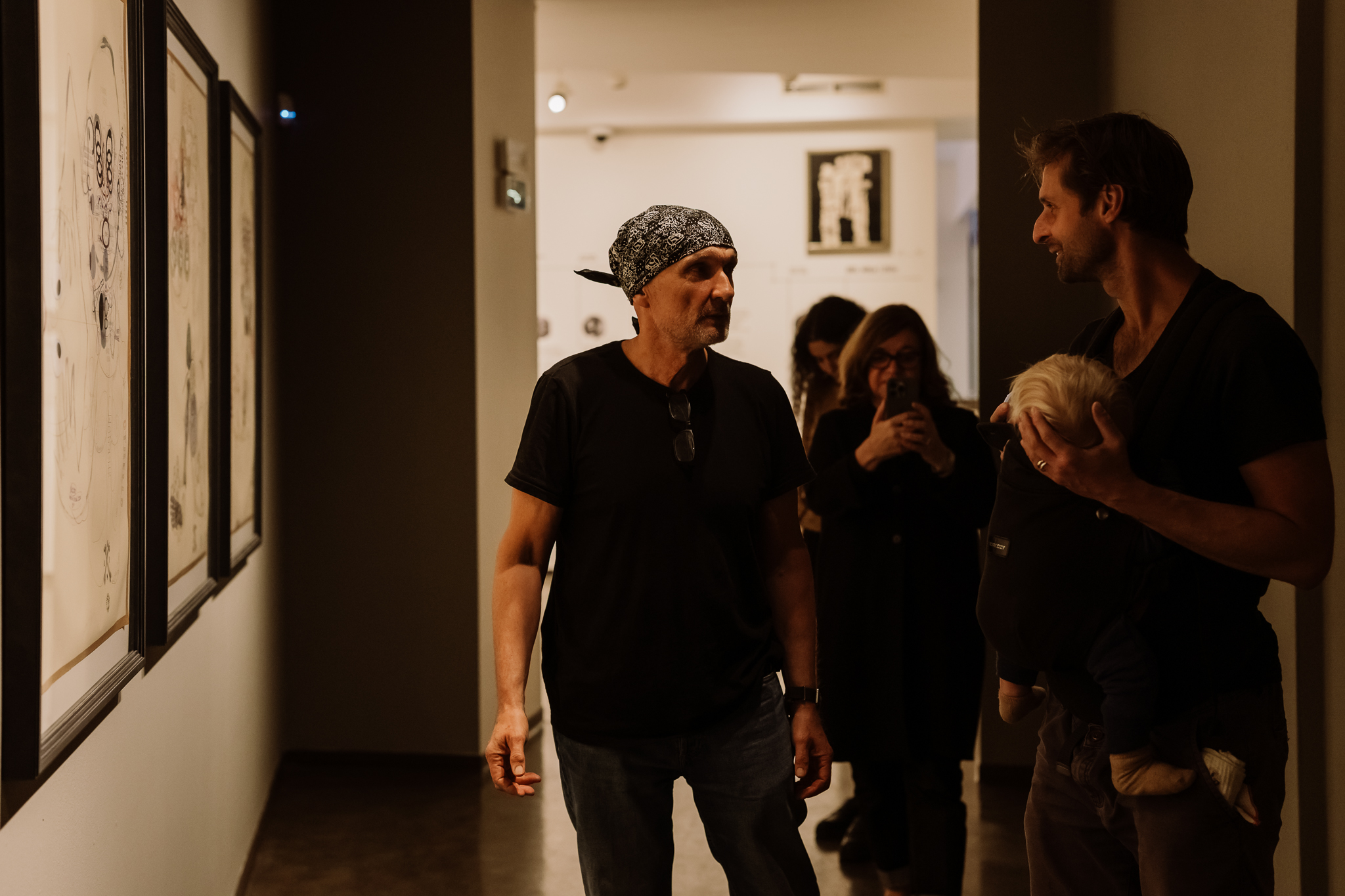
Another perspective emerges in Luboš Plný’s Materia Delicata at Galerie Smečky, on view until 28 November. Plný’s anatomical drawings function as maps of his own corporeality, recording physiological data, medical measurements, time and personal events. During PAW, the exhibition was complemented by the workshops Between Skin and Image and The Body as a Family Map, which expanded these themes towards personal experience, identity and even the creation of a collective family self-portrait.
In a State of Instability and Constant Transformation
Closely connected to corporeality is the broader experience of uncertainty and continuous transformation, reflecting our position within an ever-changing world. Clément Bedel’s Floor Is Lava, continuing at the French Institute until 24 October, takes the children’s game in which players must avoid touching the ground as a metaphor for a situation in which stability can no longer be taken for granted. In Vladimír Houdek’s The Third Landscape, also on view at HYB4 until 24 October, the figure moves between past, present and imagined future, between reality and imagination.
A more personal dimension of transformation was explored in Maturation, an exhibition by Sára Konečná and Tereza Štětinová at European Arts. Both artists approach change as a fundamental aspect of life – sometimes visible and ritualised, at other times almost imperceptible and continuous.
From a different perspective, Tomáš Polcar’s Interference at Ethera Gallery, on view until 15 November, can also be understood in relation to instability. The exhibition places two spatial and visual systems in tension with one another: geometry here does not function as a fixed order, but as something that emerges through the very collision of forms.
Transformation also enters the gallery programme through material itself. Between Worlds at KodlContemporary, on view until 1 November, connects ceramics and alchemy, reminding us that the transformation of matter is also one of the oldest ways in which we have conceived of the transformation of human beings and the world.
By contrast, in Jan Jedlička in Maremma, continuing at UNTITLED-ART until 28 November, the artist works directly with pigments derived from soil, minerals, stones and sediments. Here, landscape is not merely a subject of representation but physically enters the image itself.
Sites of Memory
Another prominent connection running through the programme is memory. The Headless Horseman at the House at the Stone Bell, on view until 18 October, revisits the 1990s and a generation that grew up amid post-revolutionary euphoria, emerging pop culture, advertising and the arrival of the free market.
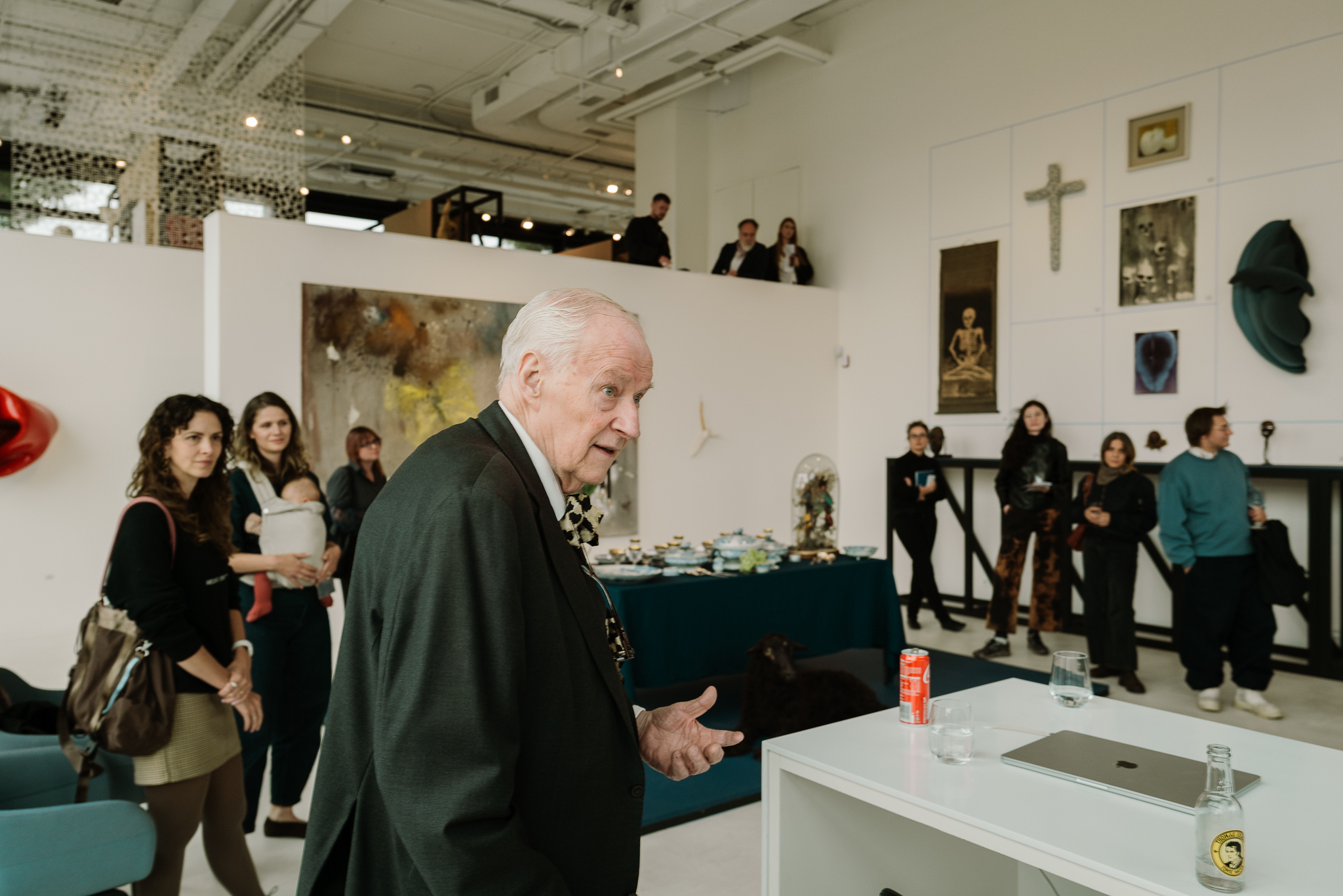
Private collections offered a different form of memory. This year’s festival demonstrated that a collection need not be merely an accumulation of owned artworks, but can also function as a personal archive of relationships, encounters and decisions. Oldřich Uttendorfský’s Cabinet of Life at Magnus Art, open until 16 December, brings together artworks, historical artefacts and natural objects, blurring the boundaries between art, curiosity and personal fascination.
The exhibition Spellbound by Polish artist Natalia Kleszczewska at HIDDEN Gallery, on view until 31 October, also turns towards the past in its own way. Drawing on hauntology and Mark Fisher’s notion of “lost futures”, the artist combines motifs from science fiction, horror and folklore in her paintings, creating figures that exist somewhere between the human, animal and extraterrestrial.
A more intimate dimension of memory is explored in You Can’t Return, You Are Here by Bystrík Klčo and Margarita Ivy at Karpuchina Gallery, which can be visited until 18 October. The exhibition grows out of reciprocity, listening and personal recollections. Translucent casts of clothing and everyday objects function as traces of things that disappear while remaining present in memory.
What Usually Remains Hidden
Alongside memory, care emerged as another recurring theme this year. I Need It at the AVU Gallery presented technical workshops as spaces where craftsmanship, material knowledge, experimentation and contemporary art intersect. Attention shifted away from the finished artwork towards the people whose labour often makes its existence possible.
Vita aeterna at the Museum of Decorative Arts in Prague (UPM), on view until 18 October, addresses a similar question from the opposite perspective: rather than the creation of artworks, it focuses on their preservation. Restoration reminds us that cultural heritage does not survive on its own, and that its continued existence depends on long-term care, decision-making and specialised labour.
Another layer of the festival consisted of projects and spaces that are not usually accessible to the public. Among them was Young Selection 03, presented in the functionalist villa The House. Alongside eleven emerging artists who are not yet represented by galleries, the venue also opened its studios during the festival.
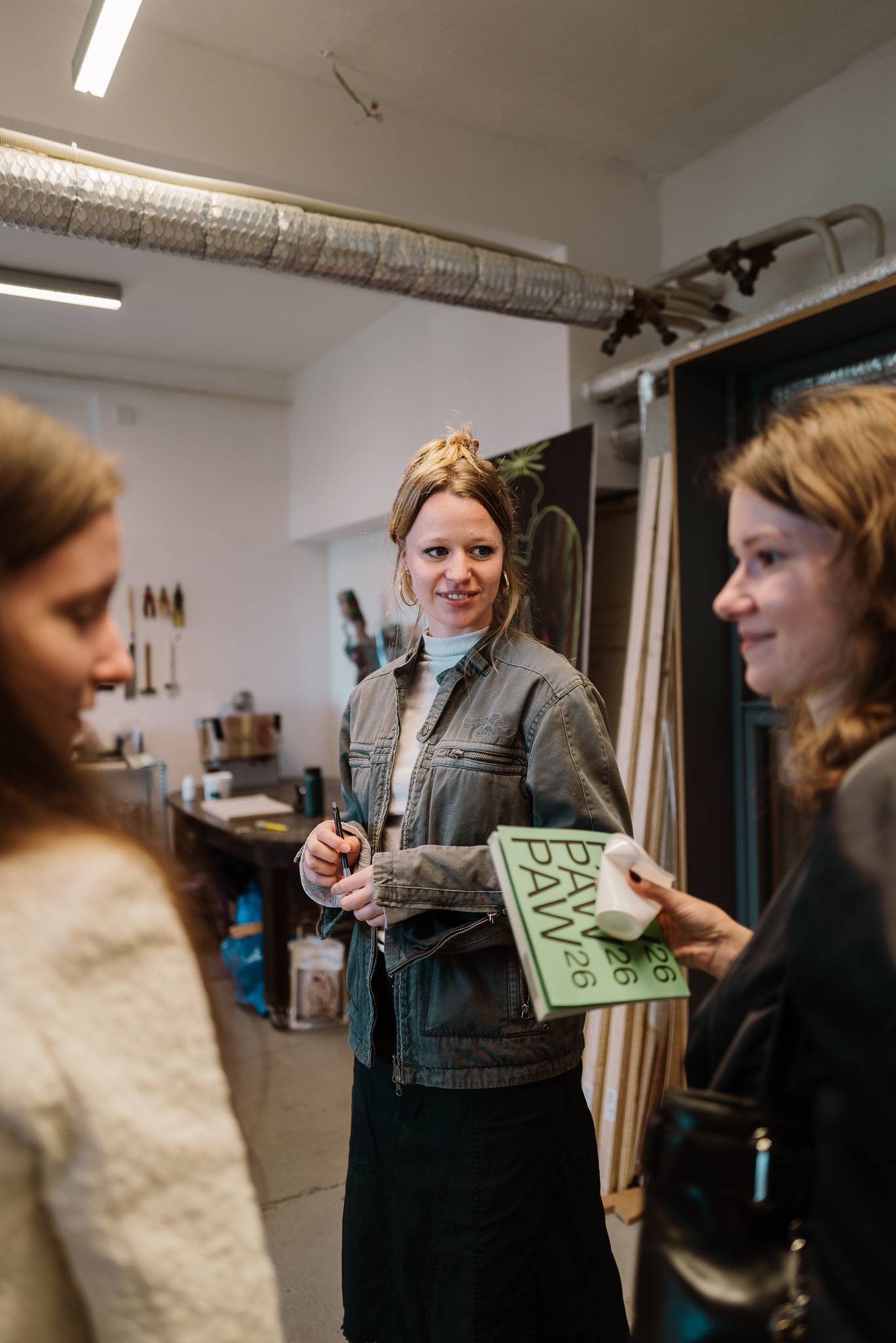
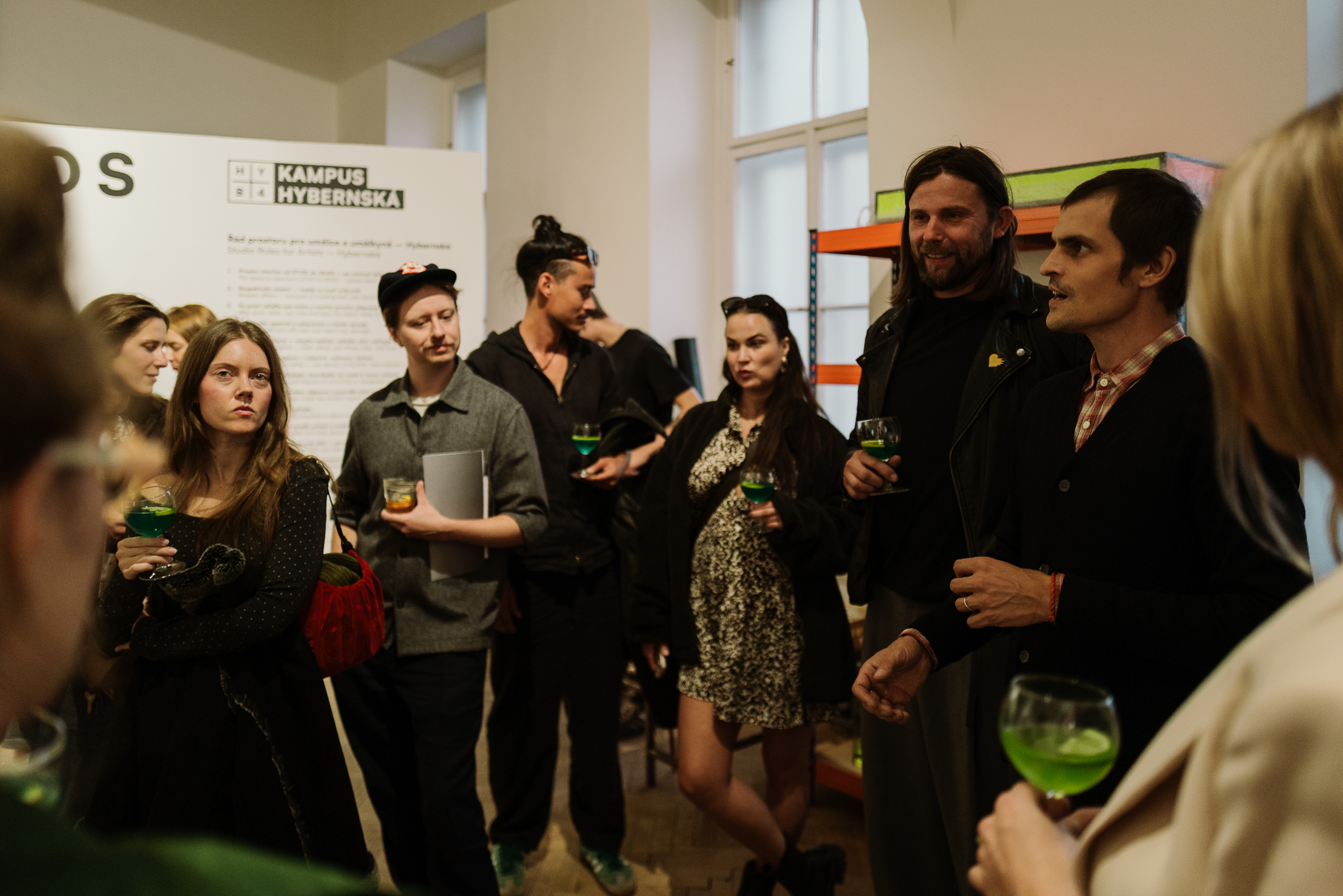
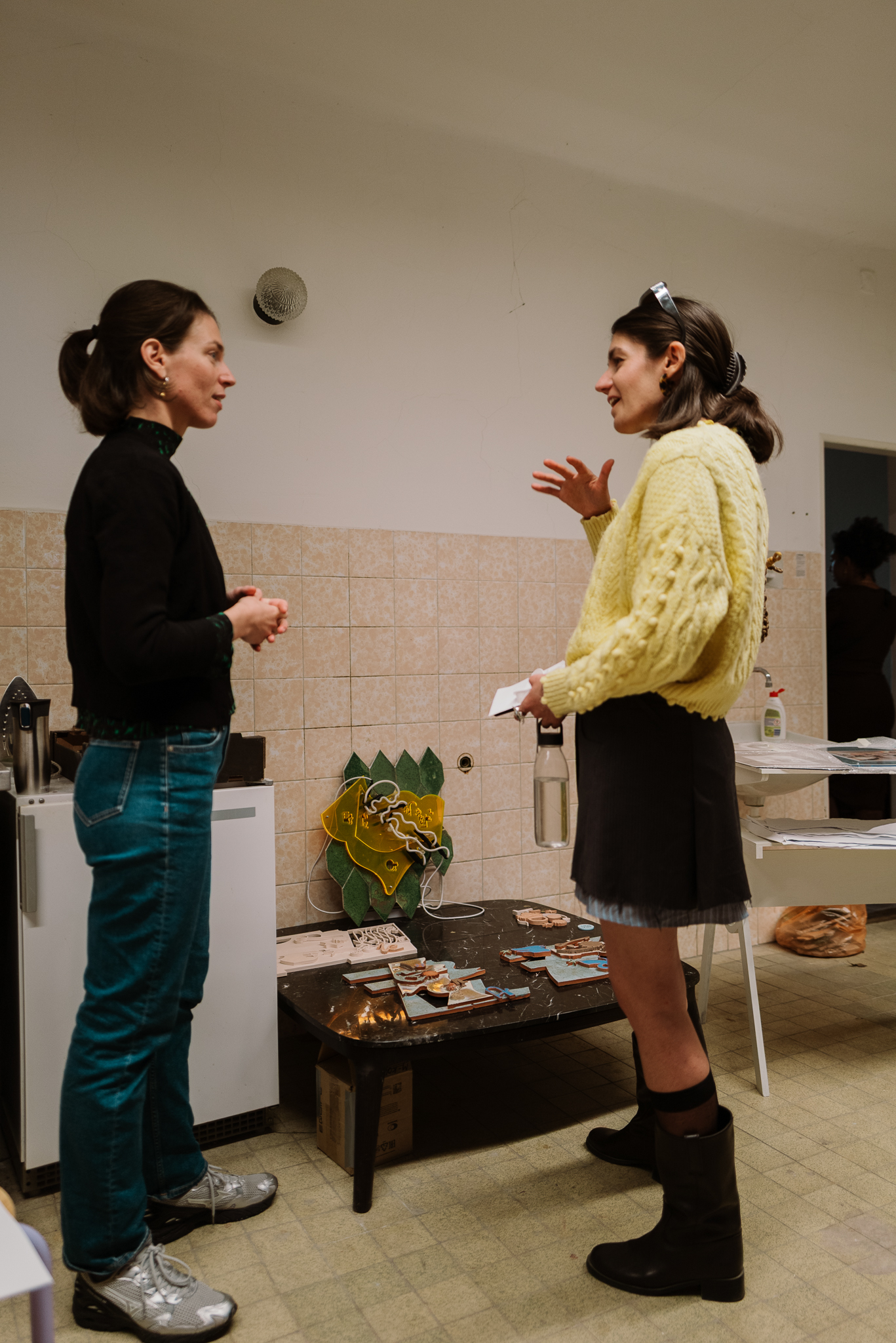
The Open Studios programmes at The House and at Hybernská, where the residency studios of Hong Kong artists were also made accessible, offered insight not only into finished artworks but also into the environments and conditions from which artistic practices emerge.
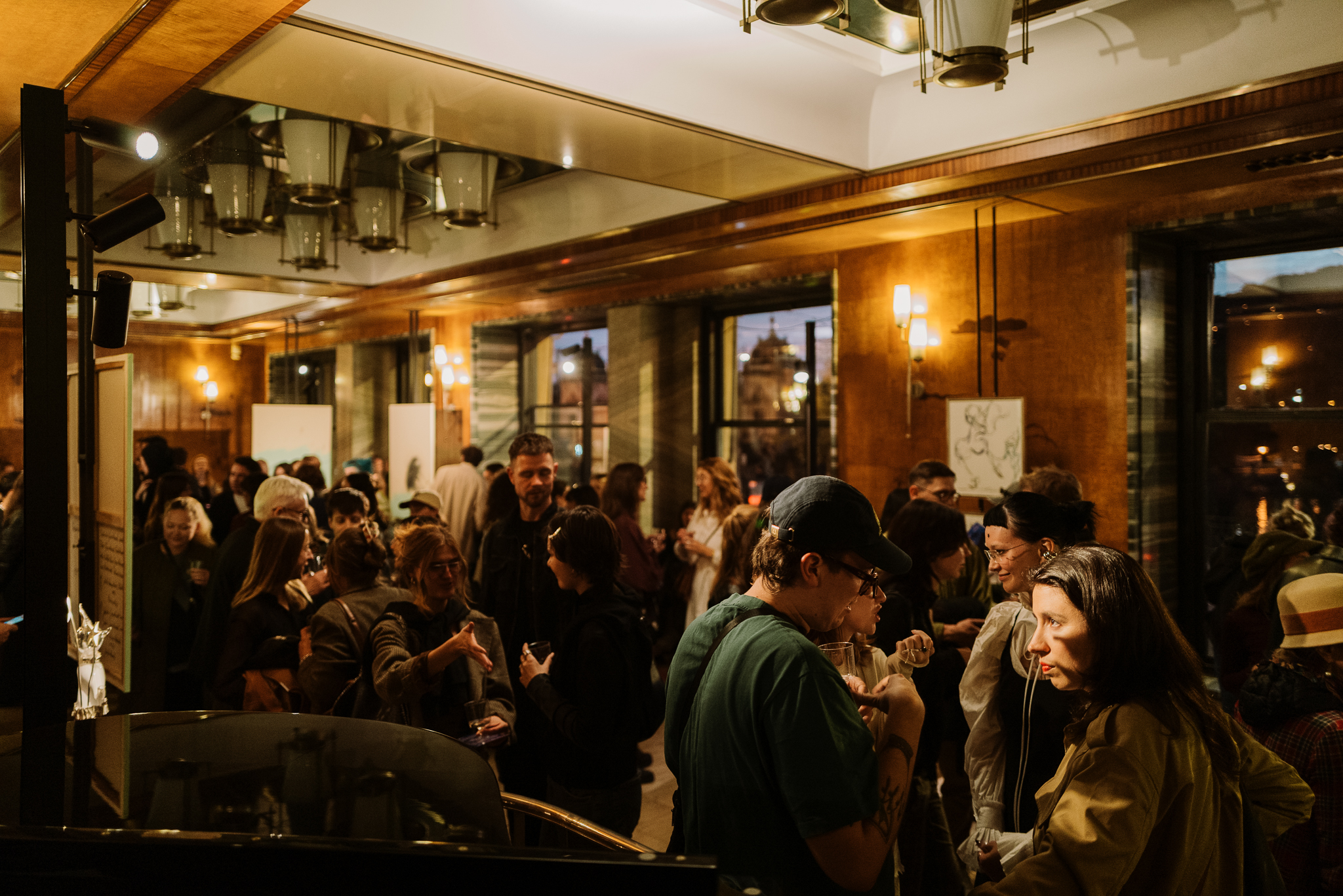
Another example was Le Chat Noir, a project by Julie Béna and Marek Ther presented at the Parnas restaurant. Here, the historical interior was not a neutral exhibition space but an integral part of the installation, bringing together video, performance and the cultural memory of the site.
Projects such as these demonstrated how the meaning of an artwork changes when it enters not a white-cube gallery, but a space already charged with its own history and social associations.
Research as Part of Artistic Practice
The programme also featured projects emerging from longer-term artistic research. At Světova 1, Burden of Gravity – From Waking to Space, on view until 31 October, presents the outcomes of the As We Grow 2026 programme led by András Cséfalvay.
Rather than examining gravity solely as a physical force, the individual works approach it as a way of thinking about relationships, orientation, weight and the possibility of breaking away from established structures.
Similarly, Inspiration Forum Lab: Trajectories at Display, on view until 29 October, emerges from a year-long artistic research programme. The participating approaches trace movement across time, landscape and memory – from sand and geological processes to local narratives of disappearing landscapes.
After the Festival
Although PAW26 ended on 27 September, many of its exhibitions continue beyond the festival itself. In this sense, the festival can serve as a guide for the weeks that follow.
If you did not manage to see everything during the four intensive days, now is an opportunity to return to individual venues and themes at a slower pace and visit some of the exhibitions mentioned above.
The Prague Art Week website and this year’s catalogue remain useful guides to the exhibitions, galleries, institutions and other venues that participated in the programme – even after the festival itself has come to an end.